For people of my generation, December 3rd always bring back the memories of the Bhopal Gas Tragedy - the world's largest industrial disaster in which thousands died and over half a million people suffered, some till today. While the impunity with which the large corporate was allowed to escape (literally in the case of its CEO) from being held liable, is a horror folktale for many today, the spirit of easing regulations to accommodate investment, particularly polluting industries, continues unabated in this country. It has become even more atrocious if anything.
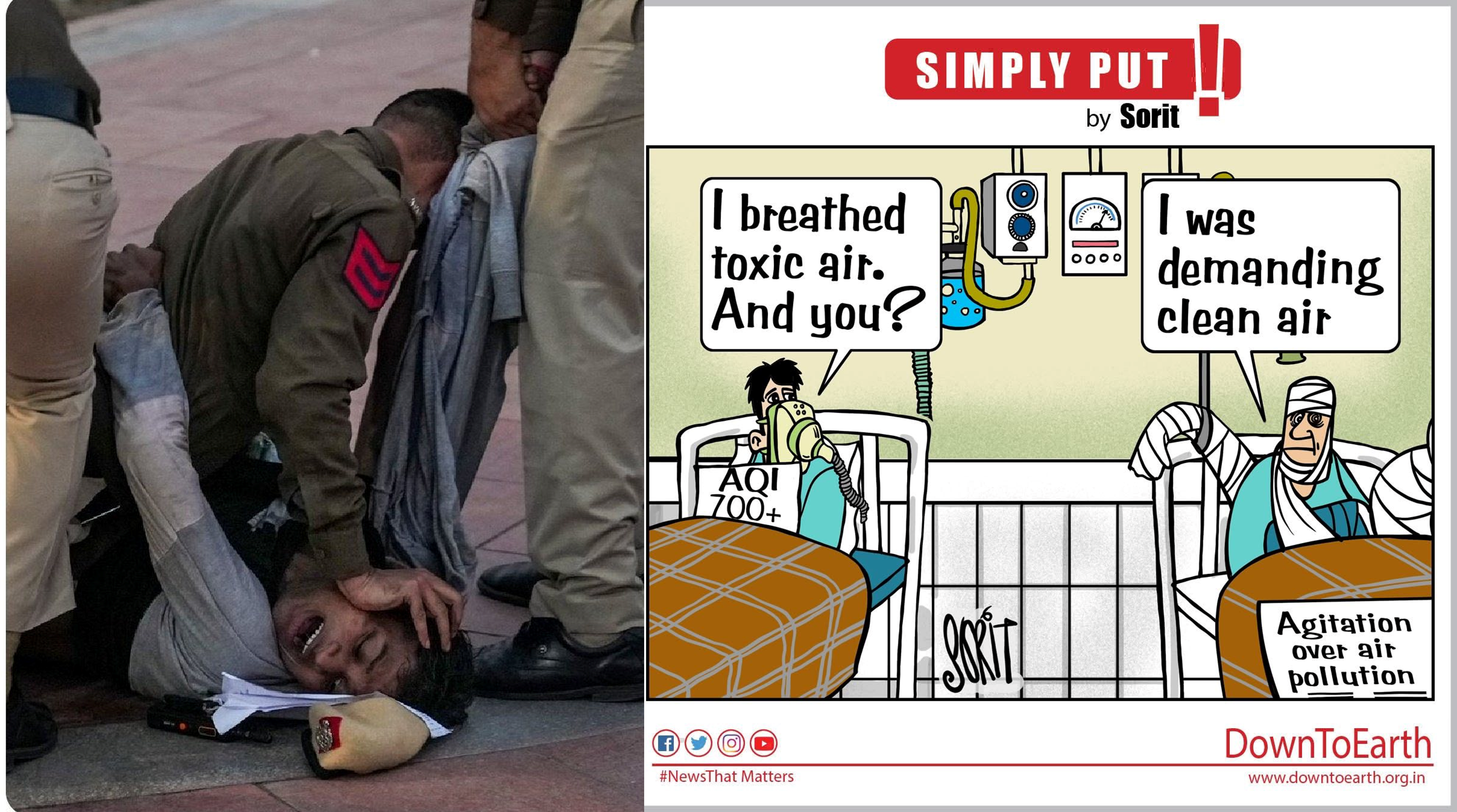
December also bring the annual spectacle of Delhi's air pollution that continues to raise year on year with no responsible respite in sight.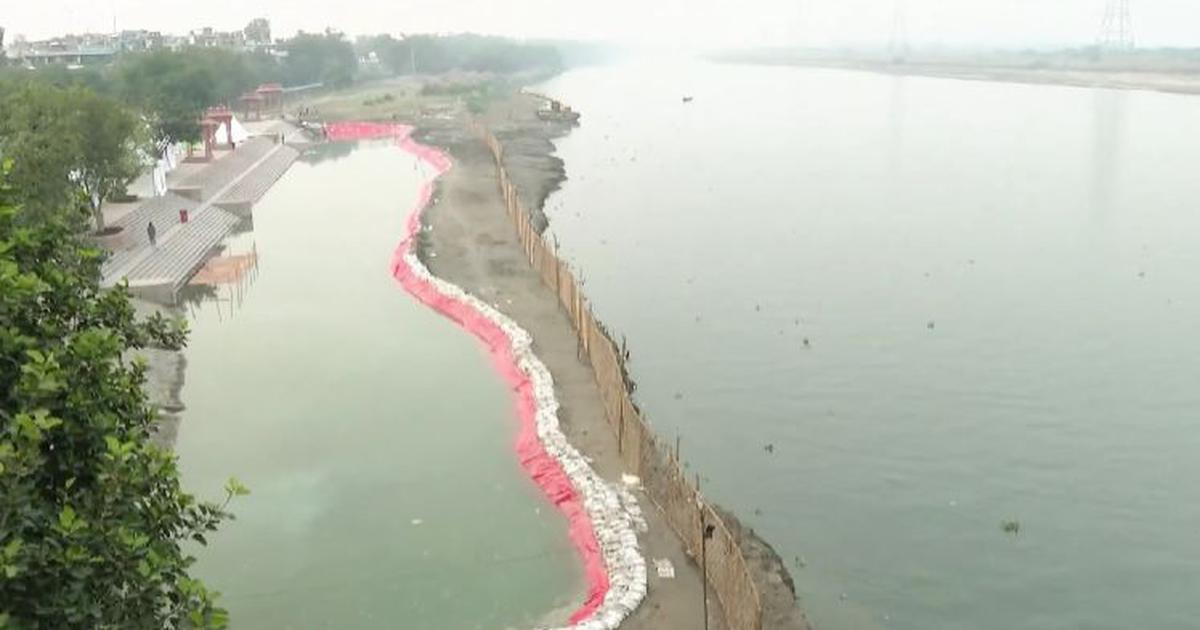 This year, the new government in Delhi, first tried to fix the meters that measure the air pollution and failing that, it ensured that the protesters demanding clean air were treated in a way to intimidate and threaten everyone else not to dare demand clean air. We earlier saw the chaat window dressing by the same government, where it insulated a part of the river bank to create an artificial lake for the privileged (including the Prime Minister and select media houses) to offer prayers and feel good about themselves while the rest of the public had to make do with the pollution filled Yamuna river.
These two incidents, particularly the response by the State displays the prevailing protocol for handling environmental crisis that may impact the general public. This is especially so since the last decade with the BJP government in the top. But does not stop with them and can be traced back even further in time to the previous Congress governments as well.
Industrial Pollution Disasters History in India
The industrial pollution disasters in India can be categorized as -
(a) Industrial accidents
(b) Industrial output either as unsafe products or pollutant byproduct / effluent
(c) wanton neglect of a reported problem that has been executed with conniving regulators (or increasingly the regulator themselves being turned into facilitators to the pollution), and
(d) chronic problems that have long lasting impact on the body of the people working / exposed, which goes unnoticed for years, even decades in some cases and could lead to a large health recurring health bill that can break families and societies.
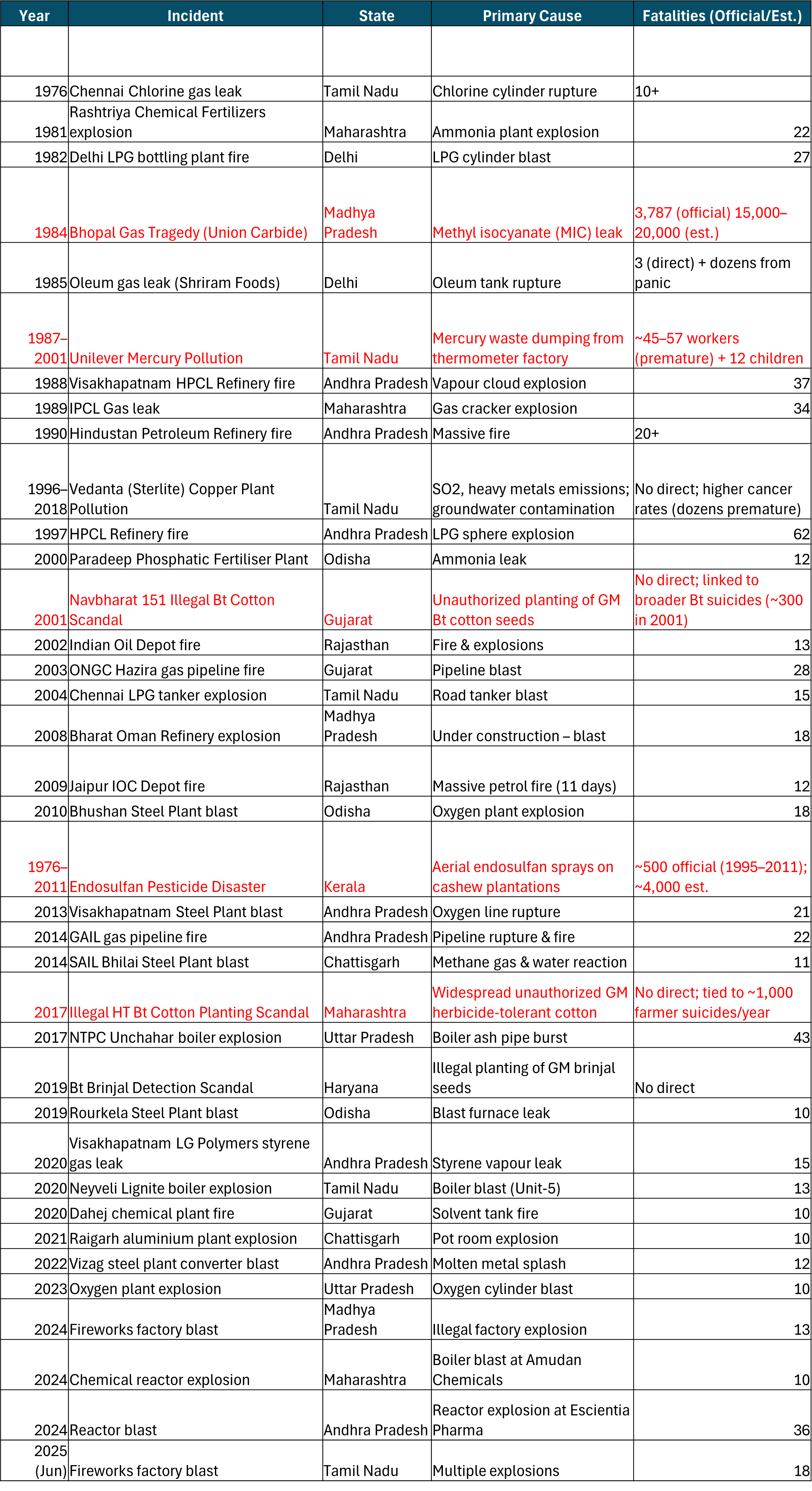
Please note: the above table is indicative and may not be all inclusive. These are based on available online material compiled by generative AI which have limitations.
It was the Bhopal tragedy that took us to do some soul searching and enacting regulations on Industries (read Anderson is not the villain, a piece I wrote 15 years ago). If not for the several publications and movies on the Bhopal by some amazing journalists and writers of that period, we would not have gotten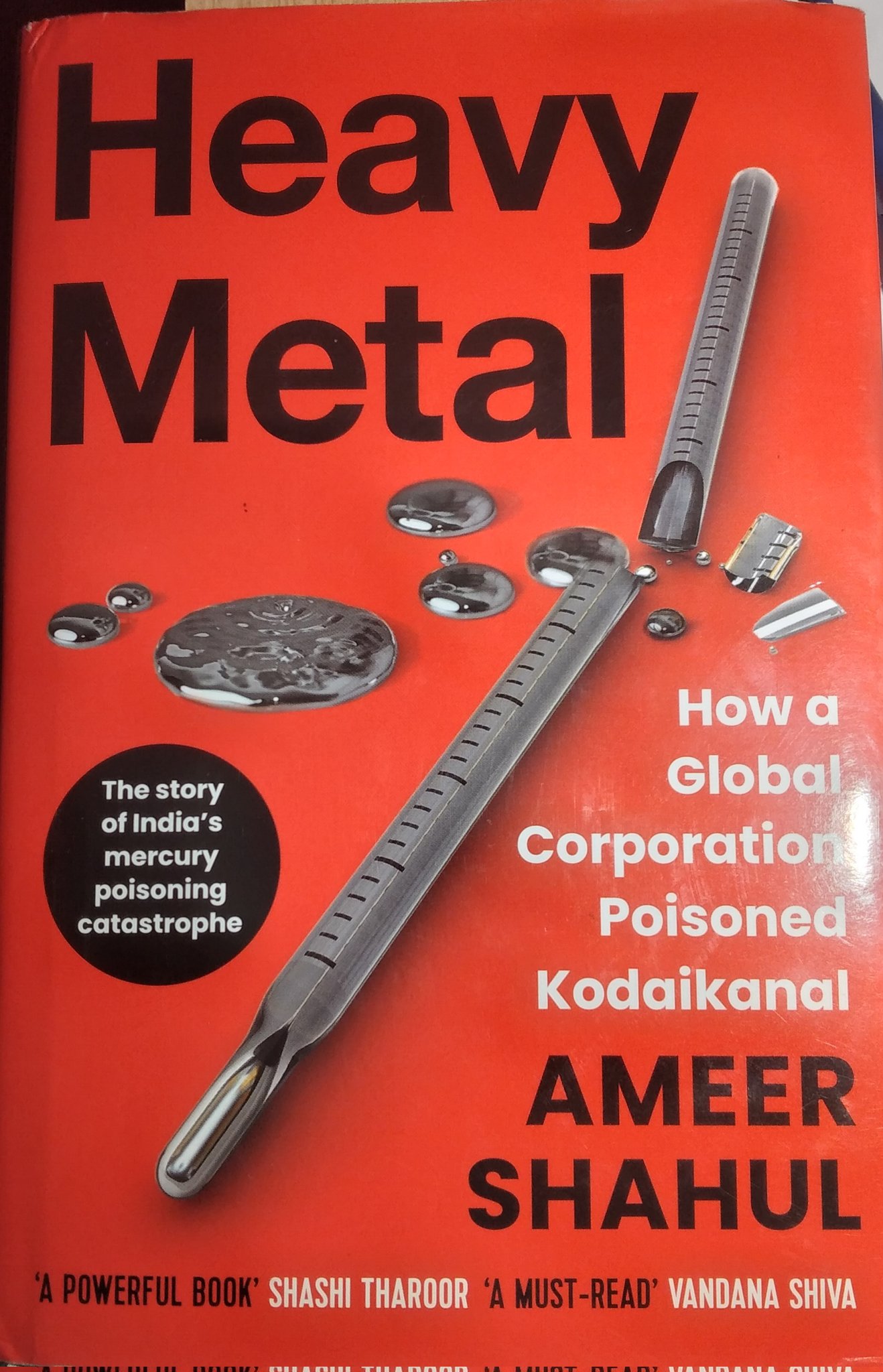 to know. Despite the continued influence and intimidation by successive governments, the civil society continued its struggle and that has also had an impact in ensuring that some corrective measures were taken.
But it didn't stop there, there was Kodaikanal that came to light with its impact still lingering. If not for the brilliant and personal writing by Shahul Ameer, through the publication Heavy Metal, people may not even comprehend the lasting devastating impact of the mercury pollution by one of the leading brands in the world. A decade earlier perhaps the Kasargode disaster of Endosulfon was uncovered by the local journalist Shree Padre. A movement that ended up bringing international attention to the problem of pesticide spraying and resulted in the ban across the world of the deadly chemical.
Indian State vis-a-vis Industrial Environmental Regulation
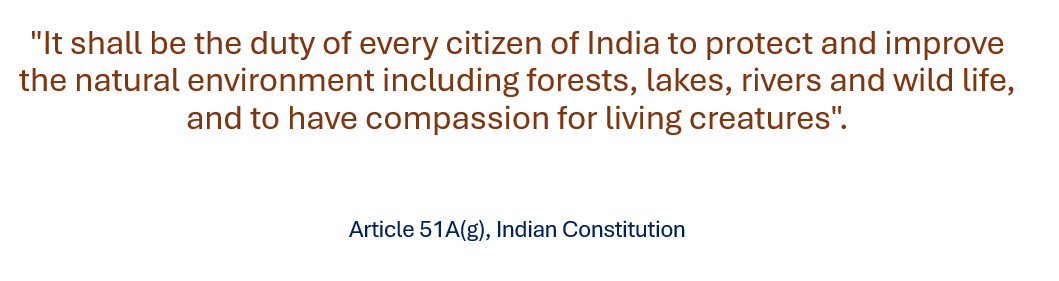
India as a Nation doesn't seem to have any clarity on polluting industries. While the Indian Constitution is unique in its essence that it acknowledges and incorporates the word, "Compassion" as a core value, the interpretation and practicality of the same is exhibited and ensured has been not consistently adhered to by the several governments of India since Independence.
Since Independence, our environmental policy has vacillated between trying to get some strict regulations done to undermining the very same regulations. If one were to draw a timeline of our State attitude towards environment and polluting industries, it may look like the following --

As the table indicates, the watershed moment in the Indian regulation of Industries was a disaster of the magnitude of the Bhopal gas tragedy. The Liberalization era that started in the 90s, gained significance and strength in the 2000s and started to dictate terms in the 2010s. It had its impact in the systematic dismantling of the regulatory regimen in the past 5 years or so. Though there have been subsequent man-made disasters after the Bhopal tragedy which have resulted in hundreds of fatalities, these cannot be exclusively attributed to the industries or corporate and the inability or unwillingness of the State to affix the responsibility in the early days, and increasingly cooption has resulted in companies getting away with all kinds of disasters.
The Uttrakhand floods a decade ago and its recurrence in the recent years is a clear case of the disaster-by-design of the several Dams and Hydro-electric projects in the high seismic zone. A disaster foretold by an environmental scientist who even gave up his life trying to  warn the government against such movement (read all about the amazing dedication of Prof. G.D. Agarwal and his fast unto death here).
Go back further and one of the chronic industrial disasters that continues to take farmer's lives is the introduction of the Genetically Modified seeds. Government's own admission of the number of farmer's suicides and death runs to nearly half a million and even more so according to unofficial sources. If not for the work of civil society, we would not know the causal effect that the Bt Cotton had on the farmer's decision to commit suicides. Scholarly and deeply field study based works such as that of AR Vasavi's in her book Shadow Space gave us an idea of the nature of the introduction of a technology with much promises with corporate promises and government's promotion, both of the actors disappeared the moment the promise didn't work and the farmer was left to take his life overburdened by debt and isolation. Then of course, the governments decided to shroud the data of farmer's deaths in a language and categorization that is following the step 3 outlined in the protocol later in this article.

Today even the State's environmental regulation agency that is supposed to look at providing the required permissions is given a rather elaborate English expansion for a Hindi word Parivesh (meaning milieu or environment). The expansion reads - "Pro-active and Responsive facilitation by Interactive, Virtuous, and and Environmental Single-Widow Hub"!! Only in a English murdering obsessive abbreviation / acronym coining gutter of bureaucratic minds can come up with such convoluted terminology. It is gibberish from end to end. But, no one in the Environment, Forest and Climate Change department must really be bothered about this. The website of the Environment Ministry actually is called environmental clearance!!! At this rate, they could find the website for the Health Ministry as DrugSalesIndia, and Ministry of Education as FactorySchoolingIndia.
On online search states when any industry needs environmental clearance (EC) in India - An industry needs Environmental Clearance (EC) in India if it falls under specific high-impact sectors (like mining, power, chemicals, infrastructure, etc.) or crosses certain capacity/size thresholds, as defined by the EIA Notification 2006, ensuring projects are environmentally sustainable and get approval from central (MoEF&CC) or state (SEIAA) authorities before starting, with specific rules for project types (Category A, B1, B2) and locations.
When EC is Required (Key Sectors & Triggers)
- Mining, Power, River Valley: All new mines, thermal/nuclear/hydro power plants, etc..
- Infrastructure: Highways, ports, airports, railways, & large area development/townships (built-up area ≥ 20,000 sq.m).
- Manufacturing: Chemicals, petrochemicals, pesticides, pulp & paper, cement, distilleries, metallurgical industries, etc..
- Material Processing: Petroleum refining, coke ovens, asbestos, chlor-alkali, etc..
- Service Sectors: Oil/gas pipelines through sensitive areas, hazardous chemical handling.
- Expansion: Any new project or expansion/modernization of existing ones that crosses capacity thresholds.
Who Grants It?
- Category A (major impacts, Central approval, needs EIA) includes large power plants, major ports, new airports
- Category B (state-level) splits into B1 (needs EIA, e.g., medium power, smaller mining) and B2 (EIA exempt, e.g., smaller construction, minor irrigation).
Industrial projects located in any of the following notified ecologically fragile/sensitive areas would require environmental clearance irrespective of the type of project:

• Religious and historic places
• Archaeological monuments
• Scenic areas
• Hill resorts
• Beach resorts
• Coastal areas rich in mangroves, corals, breeding grounds of specific species
• Estuaries
• Gulf areas
• Biosphere reserves
• National parks and sanctuaries
• National lakes and swamps
• Seismic zones
• Tribal settlements
• Areas of scientific and geological interest
• Defense installations, specially those of security importance and sensitive to pollution
• Border areas (international)
• Airports
Read the detailed process as it is supposed to happen in the CSE website (the process flowchart image is from their website as well).
This doesn't mean that the permissions are often granted, and if not for the vigilant civil society questioning, many of these projects are granted without any consultation as mandated. One such case was the granting of the tungsten mining in the Arittapatti region of Madurai in Tamil Nadu earlier in 2025. Thanks to the efforts of local community members, this biodiversity heritage zone was protected due to the massive gathering that they displayed and protest that erupted spontaneously in the region. However even in this case, though the government withdrew the contract issued, it did not stop without intimidating the population by imprisoning Mr. Selvaraj, one of the prominent youth leader who was involved in leading the protest movement. The 2023 Forest Act actually undermined some of the provisions for clearing of the forest for industrial purposes and ends up undermining the local forest-dwelling community rights over their ancestral land (read more on that here). The overall scenario of exploitation of Indian environment utilizing a callous administration and corruptible system is best expressed in the words of the central Minister for Environment, Forestry and Climate Change, Mr. Bhupender Yadav, who earlier this year in a meeting stated -
"...there is a need to rethink sustainability given that the prevailing political situation, escalating trade tensions and industrial growth are actually slowing the engine of global growth".
This stated attitude of the Ministry that is supposed to protect Indian environment is a clear indication of the policy directive. So, it is not surprising that the current rate of clearance of Environmental projects by the government is almost at 99%.
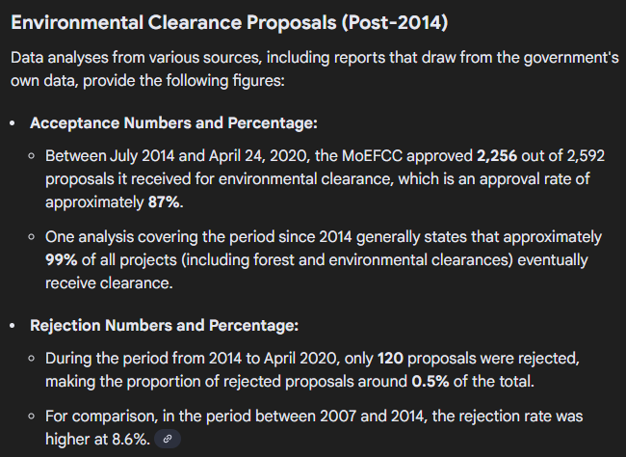
pls note: The above data from google search using Government sources only
State response to Environmental Protests / Challenges
The protocol of the stages of State response are --
- Stage 1 of response: Denial, particularly if it is clear that the remedy means upsetting the status quo of the wealthy and powerful
- Stage 2 of response: Blame it on the poor and those who don't have a voice. The way the farmer's of punjab and haryana were blamed for their stubble burning and made out to be the main villains causing the Delhi smog is an example. This year the stubble burning is down by nearly 80% and yet the smog continues, pointing to the fact that the real reasons lay elsewhere.
- Stage 3 of response: Cover up the issue with a temporary reprieve, hire media personnel to highlight the temporary measure as a solution and belittle the problem.
- Stage 4 of response: Intimidate those who protest / demand anything better as a civil society action. Try to defame them and blame them for the problem if possible. Make their highlighting of the problem as a anti-national sentiment if possible.
- Stage 5 of response: Rename some existing scheme or combination of schemes into some new sanskritized programme (this is especially true under the BJP rule) or abbreviated bombastic sounding term, have a major launch of the programme and spend bulk of the annual allocation budget of the programme in the launch event publicity. (This is yet to happen on the air pollution front, and may happen soon).
You can go back in the last decade and affix this on any issue and you will find this protocol being diligently followed by the central government on any number of issues. Several state governments too adopt this protocol modelling themselves on the same lines. Unfortunately, in the case of environmental issues such as air pollution, water pollution, deforestation, etc., the impact felt by the citizens is immediate and the consequences of even a small commission and omission by the government can immediately bear as a negative impact on the region if not the entire country. The climate insulated votaries of the government, viz., the urban air conditioned employees of diverse sectors, do not recognize the climate change impact as much as the invisible farmers and village producers.
Dilution and De-Criminalizing Industrial Pollutants
Not merely the extent to which the industries can pollute, but, the regulator's capacity being curtailed repeatedly has been held as a ''achievement'' of governance since a few years now. In recent years. The ''ease of doing business'' (EoDB) has become a wand that can sweep on top of lots of regulations and make them disappear or freeze into inactivity. Bending rules is called ease of doing business as a way of doing away with regulations and rules. It has become a mantra for the central and state governments because they are convinced that getting investments into the state at whatever cost is the biggest accomplishment for all of them. We have had the Finance Minister of the country announce in the floor of the Parliament, the "de-criminalization" of minor environmental offences that basically told the corporate houses to continue to pollute or destroy the environment, as long as they can declare it themself and pay a small fine as a compensation.
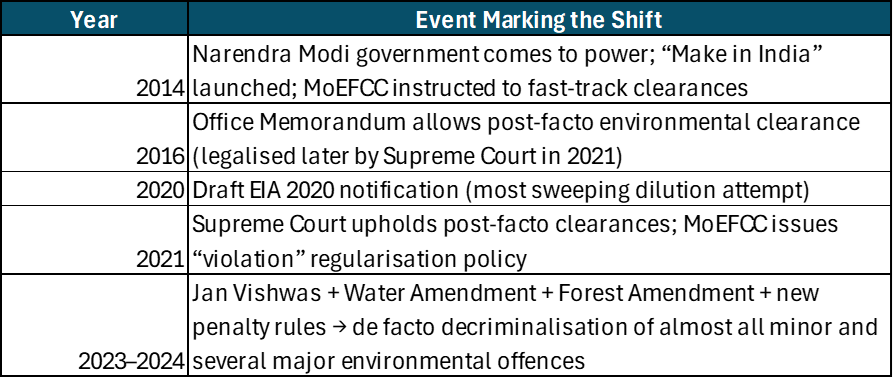
No comprehensive nationwide count exists as such for all environmental laws decriminalized, as changes target specific offenses (sections) within key statutes rather than entire laws. Major reforms affected 5 core environmental acts, decriminalizing around 110–120 minor offenses cumulatively through an online research. This estimate aggregates provisions amended across acts, based on official statements and analyses. Serious crimes (e.g., causing widespread harm) remain punishable under the Indian Penal Code (which itself has been renamed to reflect the growing intolerance with anything said in English these days). If one were to look at the overall impact of the EoDB, apart from its short term objective, it has resulted in a shift in the way we think about our relationship with land and nature altogether (the book by Prof. Nikita Sud captures the stages of such changes in three different cultural spaces in India, a review of her book The Making of Land, can be read here).
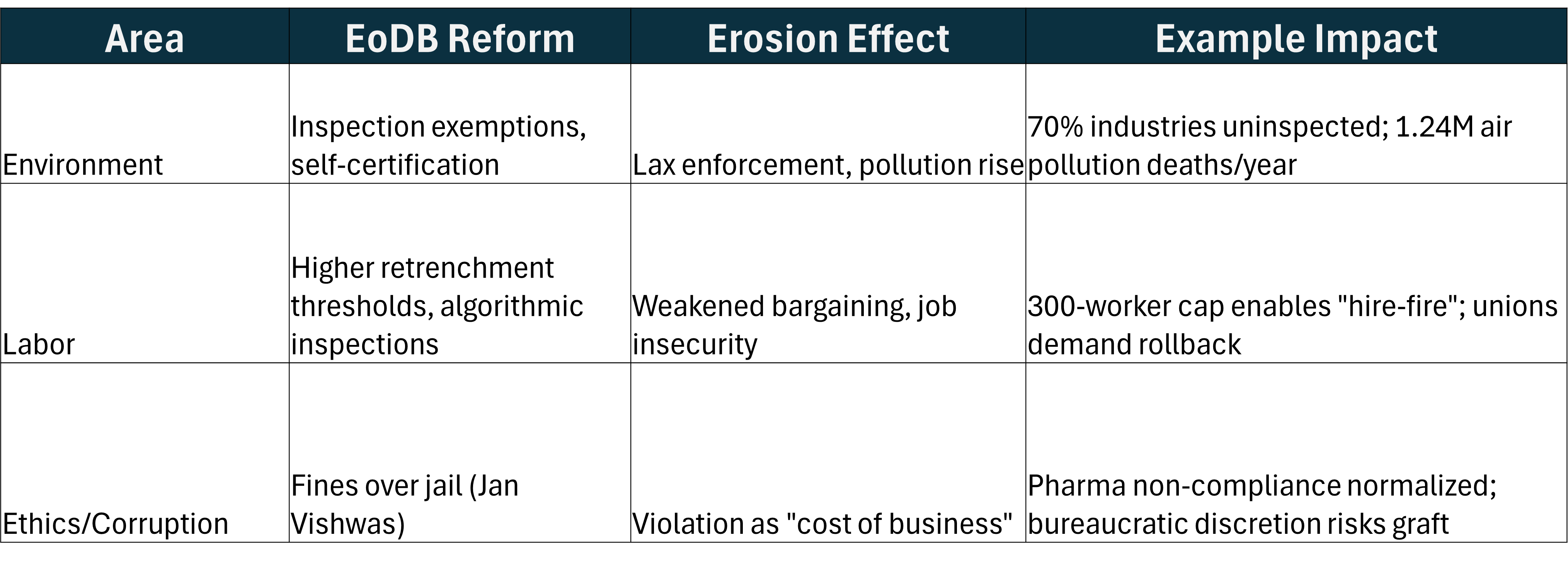
Apart from the de-criminalizing of environmental violations, the other impacts are on labour rights being derailed and space opening up for large scale corruption as centralized and based on discretion of a few people resulting in massive levels of corruption being possible. One such instance that has been reported recently has been in the claims of benefit of the Genetically Modified seeds by India's premium agricultural research organization Indian Council for Agricultural Research (ICAR). Now even such a scientific institution, when confronted with its own data inconsistencies, instead of using science, adopts the State mechanism of either denial or defamation of whoever is making the accusation. This erodes the trust that people have towards such institutions and the science that the institution is supposed to be allegiance to.
Corruption in Environmental Issues
- CBI probed ~50-100 high-profile cases involving ECs, including bribery for mining approvals and pollution consents. Examples: Hindalco (Aditya Birla Group) FIR in 2024 for 2011-2013 coal mine clearances in Odisha; Delhi Pollution Control Committee (DPCC) racket busted in 2024 for bribe-driven consents. (link. link)
- Violation Category Projects - 112 projects (e.g., mining, cement plants) processed under MoEFCC's "violation" rules (2017-2021), with 55 granted ex post facto ECs—often criticized as enabling corruption via post-hoc regularization. (link)
- Post-2014 EC Proposals: 3,290 received by MoEFCC; only 85 rejected (~2.6% rejection rate), raising red flags on undue influence. (data above)
- Broader Context: Transparency International's Climate & Corruption Case Atlas documents 84 global cases of environmental graft, with India featuring prominently in mining/oil sectors (link).
- Central Vigilance Commissioner (CVC) notes systemic delays, with many CBI environmental probes pending as of Dec 2024 for long durations without expedition (link).
In all over 500 cases of environmental violations maybe under probe for corruption of various kinds by the CBI currently.
The resultant losses could be to the tune of hundreds of billions of rupees as revenue losses and corrupt money that is flowing into the system. (link). Nearly 2 million people could have been evicted during this last decade, livelihoods lost and habitat for several species irreversible destroyed.
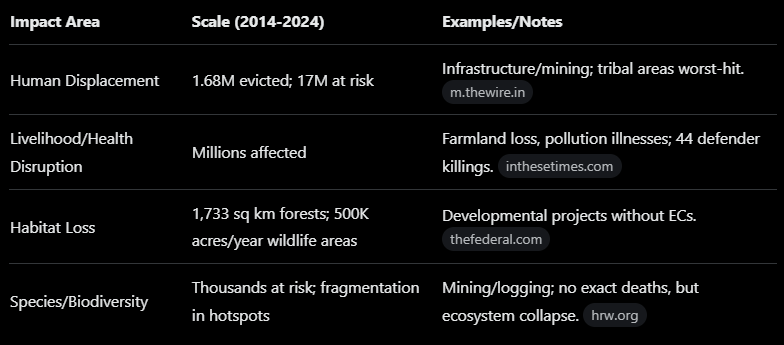
The Role of Judiciary
Judicial proactiveness has time and again played a critical role in ensuring that the last stop for justice in India delivers even if the executive and the legislation fail the citizens grievance on environmental issues. Time and again they have saved India from fast hurtling towards anarchy. However, they too have time and again created challenges by half-hearted pronouncements, not being able to decide with certainty, abiding with the arguments of the State by default on certain issues - particularly of economic progress being juxtaposed against environmental discernment. From the Blue Nile judgement when a judge ruled that economic development can be at the cost of human health and wellbeing, to the more recent pronouncements, one of the repeated arguments that judges have bought from the State is that environment can be compromised for the sake of jobs creation or economic benefit. No questions on the long term health impact, environmental irreversible damage or its monetary negative impact have been sought by successive judiciary that has accepted the lack of such data as a norm rather than demand accountability.
It is in this light that we need to examine the recent supreme court ruling on the CREDAI Vs. Vansakthi issue that reversed an earlier judgement that said any Environment Clearance (EC) violations cannot be retrospective. This current ruling ends up almost legitimizing the environmental violator, making the scale of irresponsible investment in violation larger than law, so to say. Thankfully the dissenting note ensures that there is a continued dialogue on this subject. But the change in the Judicial acceptance of the State position is an indicator of the same measure by which State has built its argument for environmental de-regulation and de-criminalization. At one point amount of jobs created was considered important enough criteria to downplay environmental violations, now just the magnitude of investments alone is enough - this is a clear shift from a poor / middle income country that considered job creation a priority to a country that works for profit- maximization of large investors. That this is a State priority indicates the crony capitalist times we live in, but, that justice too bows to the Almighty investor is one of the most unfortunate situation that we have gotten into.
You can read all about the impact of the judgement and the entire issue in a detailed article here. The key element of what this judgement undermines is summarized in the abstract by the authors as -
The Vanashakti judgment had established a binding legal principle which could have been crucial for the development of subsequent case law. Its recall is a major setback because it threatens two key principles of environmental jurisprudence: the precautionary principle—that emphasises preventive measures and places the burden of proof on those proposing the action; and the principle of non-regression—that environmental protection standards must continue to be strengthened over time.
I remember that in the peak of the GMO debate in the early 2000s, there was a proposal by the American seed corporates to take the judiciary on a tour of USA to give them some understanding of the technology and how such cases as the biotechnology which are considered new areas, are dealt with in that country. I didn't track what happened to that proposal as it sounded atrocious to say the least that a corporate would take judiciary for such exposure visit. So, a search online currently provides some interesting data, that over 300 judicial members have attended various forms of training in American since 2017 on all kinds of issues, including some on environmental laws. Unlike the administrative services which has to outline the training programme that any individual has undergone in their profile, there are no publicly available lists as to which members of Judiciary underwent what forms of training to what end, etc., for security reasons these are kept away from public eye. However, as part of the judicial accountability, it is increasingly becoming important that there ought to be some transparency on such programmes and what forms of inputs are ingested by the members of the Judiciary as part of such programmes. My concern is that with the flagrant violations that are being committed, and with executive and legislature always being suspect. We are left with just the Judiciary to the last resort and they have to be beyond doubt regarding what influences them.
Conclusion
As I finish this compilation of the entire environmental regulation in India and the increasingly concerning de-criminalization of environmental violations, I am flooded with the concerns from several friends regarding the new Seed Bill. While I have not studied the proposal in depth, the concerns that are expressed by some friends who have done so, should send alarm bells ringing with community rights over seeds (here is a good one by Dr. Ramanjuneyulu). Time and again over the last two decades, the farmer's rights over seeds have been assaulted and attempted to be undermined through various new regulatory regimes imposed. To me this sounds like the latest attempt by the seed corporate lobby. Activist friends are holding meetings, submitting various objections and creating awareness on the dangers.
India is one of the countries that recognizes the rights of nature similar to the human rights. However, having recognized, we seem to feel our job is done. Neither the executive, nor the legislature or for that matter the Judiciary seems to be completely aware of the extent to which the environment of one of the world's mega-biodiversity country is at threat and how fragile is our condition - whether it be the air, water, soil fertility, forest cover, communities that protect these and have an organic relationship with the resources and consider themselves as the protectors - we are casually undermining all of these relationships.
From the initial phase of cluelessness, to the current corrupt and callousness, there is a distasteful path of destruction that we have entered through human greed and irresponsibility towards the next generations. Unlike personal, societal or institutional issues that could perhaps be fixed eventually, the environmental irresponsible acts cannot be fixed within a generation, within the next hundred years in some cases and never in others. The individual and institutional responsibility that's placed on the current generation is high. Do we recognize this? can we stand up to it? will be fail as a civilization and a nation? is the question, it all starts with the recognition, or as Economist Aseem Shrivastava says in his book The Grammar of Greed, do we live in a fantasy not considering what is in front of us --
"Greed always looks away from itself".
Disclaimer: I had relied heavily on the online tools of research and search to arrive at the data estimates, and stuck to being conservative side of the numbers cited. It could be worse than this as every reported issue of damage equals an unreported issue as well. Standard disclaimer apply for online search tools as these days they are all integrated with AI and AI hallucinations are often deceptive, though I have tried to cross validate each one of the numbers, do independently verify the numbers before quoting.